

Steel Cord Conveyor Belt
Engineered for the toughest industrial applications with high tensile strength and minimal stretch.
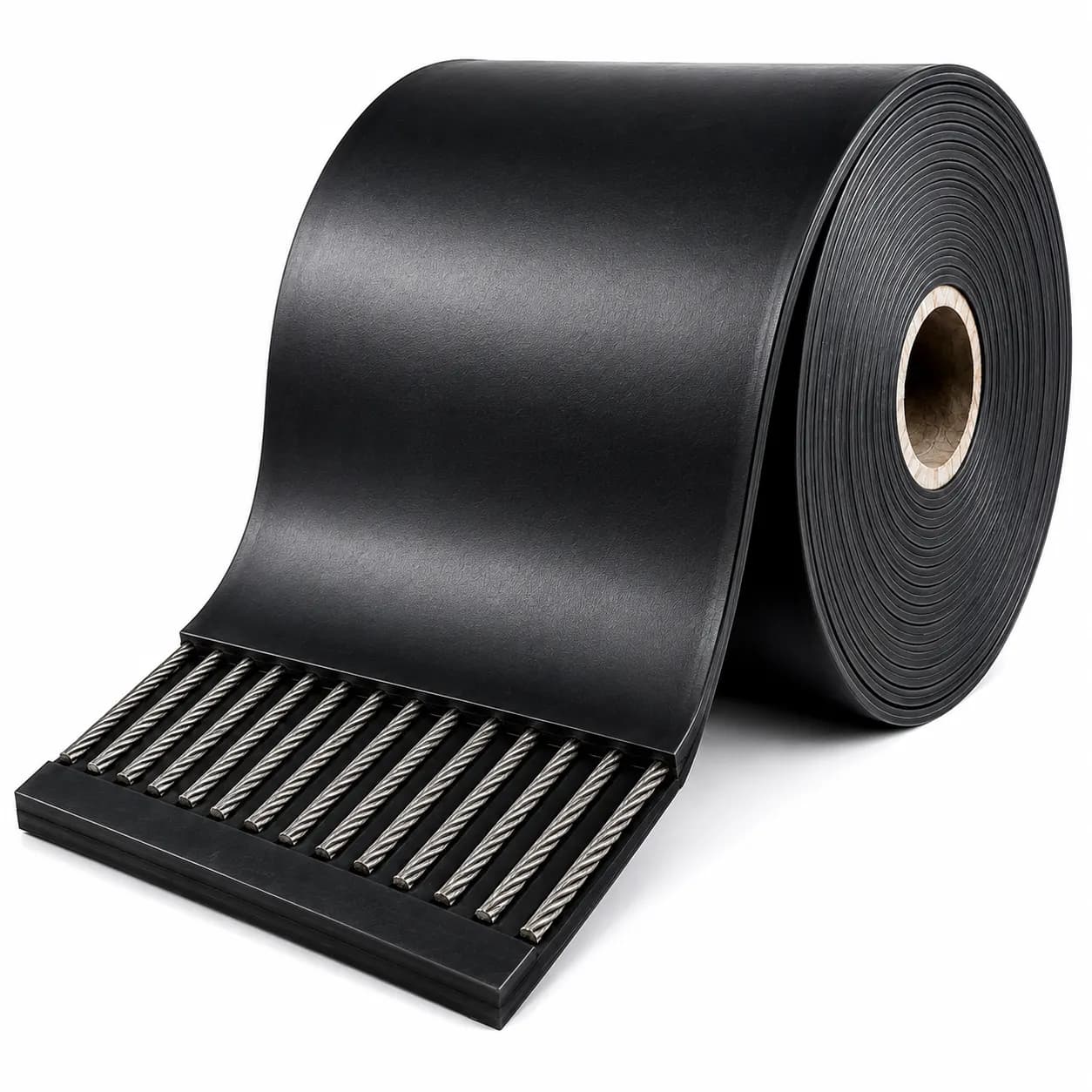
Steel Cord Conveyor Belt
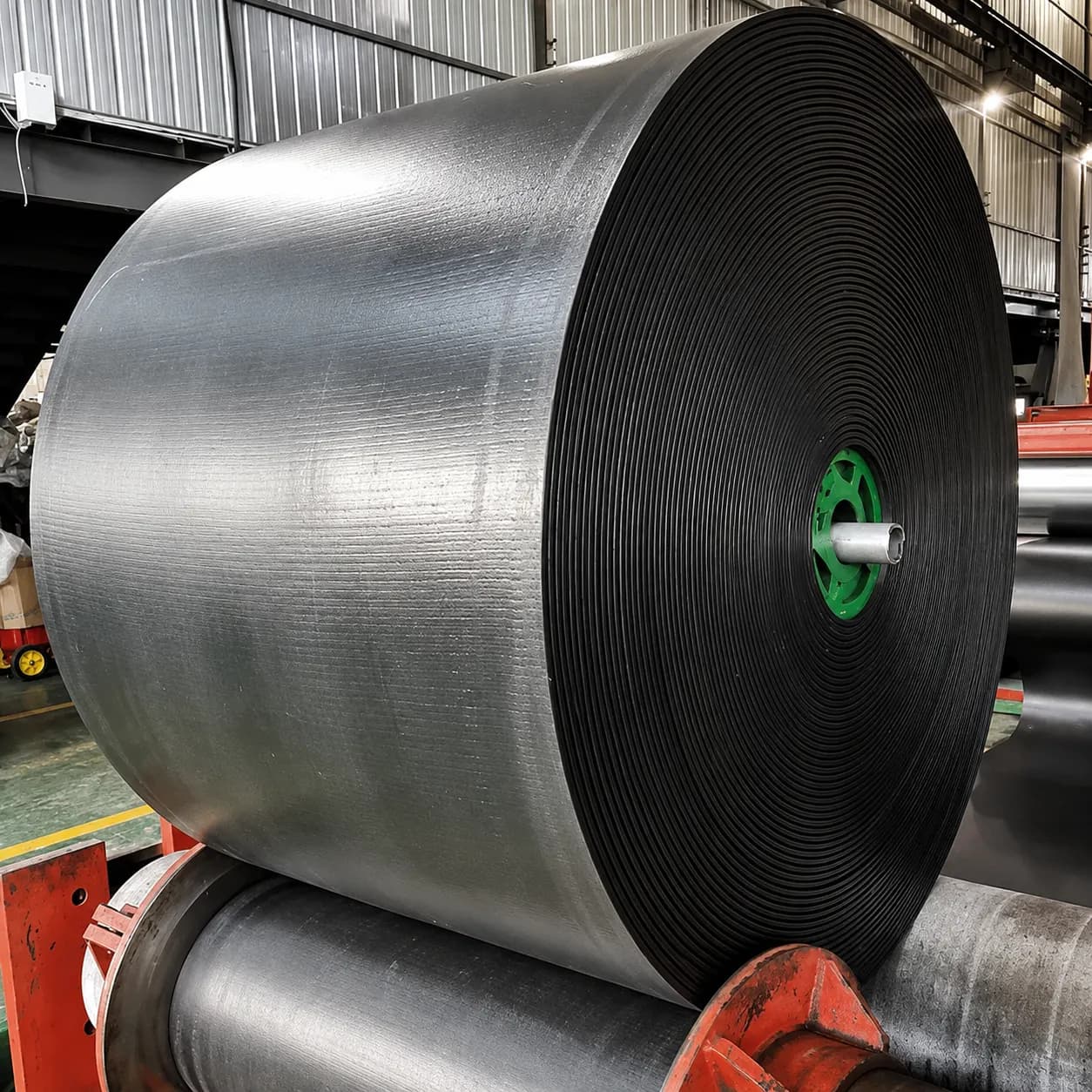
Steel cord rubber conveyor belts are engineered for the toughest industrial applications, combining exceptional tensile strength with outstanding durability. The steel cords provide high tensile strength and low elongation, ensuring the belt can handle heavy loads over long distances with minimal stretch. This makes them ideal for transporting bulky materials in mining, steel, and cement industries. The rubber coating offers excellent impact resistance, flexibility, and protection against harsh environmental conditions, such as heat, fire, and corrosion. Additionally, their smooth surface reduces material spillage, improving overall efficiency. These features collectively extend the belt's lifespan, making steel cord rubber conveyor belts a reliable and cost-effective solution for demanding operations.
CORE COMPOUNDING
High-Tensile Galvanized Steel Cords embedded in high-durability rubber with insulation gum
FEATURES
Steel cord rubber conveyor belts are engineered for the toughest industrial applications, combining exceptional tensile strength with outstanding durability. The steel cords provide high tensile strength and low elongation, ensuring the belt can handle heavy loads over long distances with minimal stretch. This makes them ideal for transporting bulky materials in mining, steel, and cement industries. The rubber coating offers excellent impact resistance, flexibility, and protection against harsh environmental conditions, such as heat, fire, and corrosion. Additionally, their smooth surface reduces material spillage, improving overall efficiency. These features collectively extend the belt's lifespan, making steel cord rubber conveyor belts a reliable and cost-effective solution for demanding operations.
Conveyor Belt Components
Multi-layer steel cord reinforced structure designed for heavy-duty endurance and low elongation.
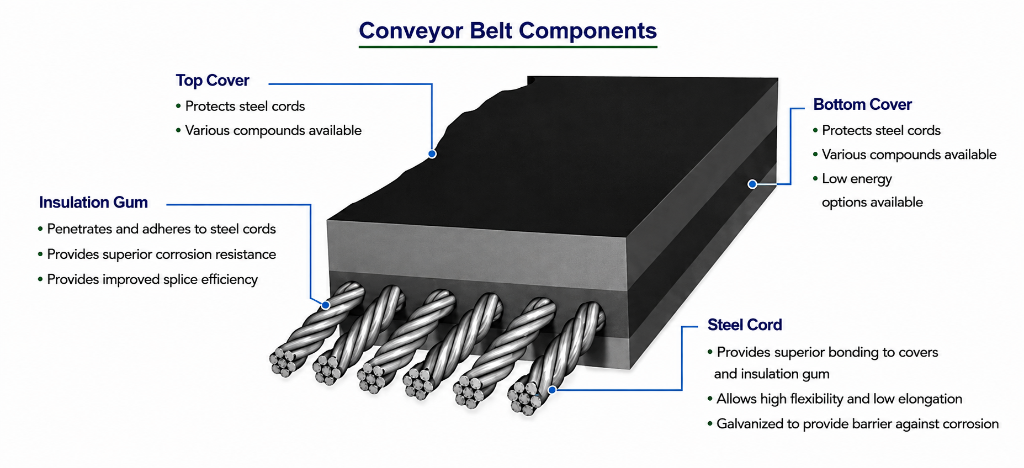
Top Cover
Protects steel cords. Various compounds available.
Bottom Cover
Protects steel cords. Various compounds available. Low energy options available.
Insulation Gum
Penetrates and adheres to steel cords. Provides superior corrosion resistance and improved splice efficiency.
Steel Cord
Provides superior bonding to covers and insulation gum. Allows high flexibility and low elongation. Galvanized to provide barrier against corrosion.
FEATURES
High Strength Steel Cords
Provide superior tensile strength and low elongation for heavy-duty applications.
Premium Rubber Covers
Excellent impact resistance, flexibility, and protection against heat, fire and corrosion.
Superior Performance
Smooth surface reduces material spillage and improves overall efficiency.
Built to Last
Engineered for long life and reliable performance in the harshest environments.
Need a Steel Cord Conveyor Belt?
Share your overland or heavy-duty conveying specifications below including belt rating (ST1000 to ST5400), belt width, top/bottom cover thickness, cover compound, and conveyor distance with our engineering team.
PRODUCT SPECIFICATIONS - Belt Ratings & Dimensions
PRODUCT SPECIFICATIONS - Cord Number by Belt Width
ST Belt Splice: Splice dimensions as per DIN 22131
Cover Compounds & Standards Offered
Applications Across Industries
Mining: Heavy bulk material conveying over long distances
Proven Application Sector
Steel Industry: Handling high-impact, abrasive bulk loads
Proven Application Sector
Cement Industry: Transporting heavy limestone, clinker and raw materials
Proven Application Sector
Overland Conveyors: High-capacity, long-distance material transport
Proven Application Sector
Related Products
Complementary conveyor system designs and high-resistance belting accessories.
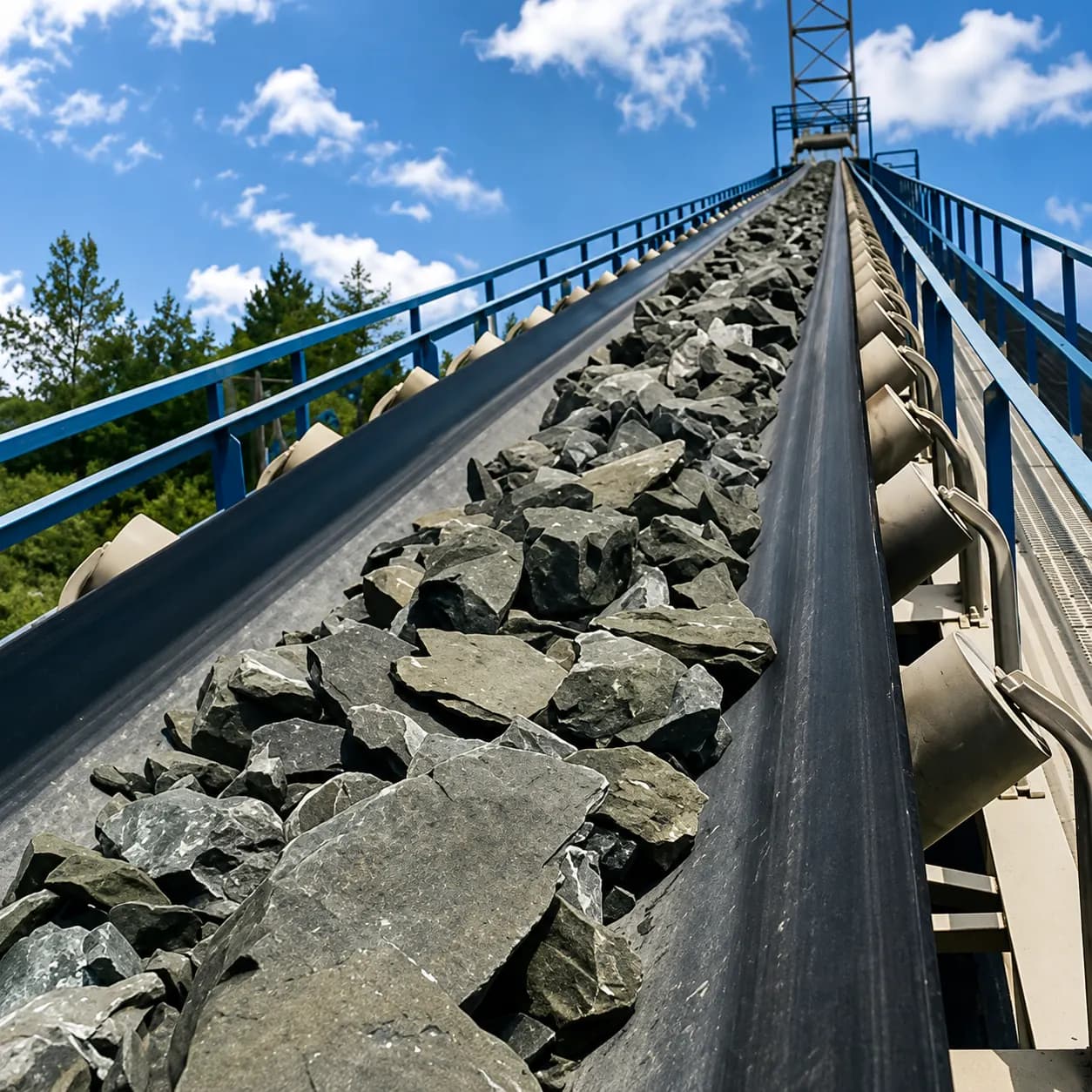
Heavy Duty Conveyor Belt
Having excellent cut, abrasion and gouge resistance, these belts can be supplied in different carcasses.
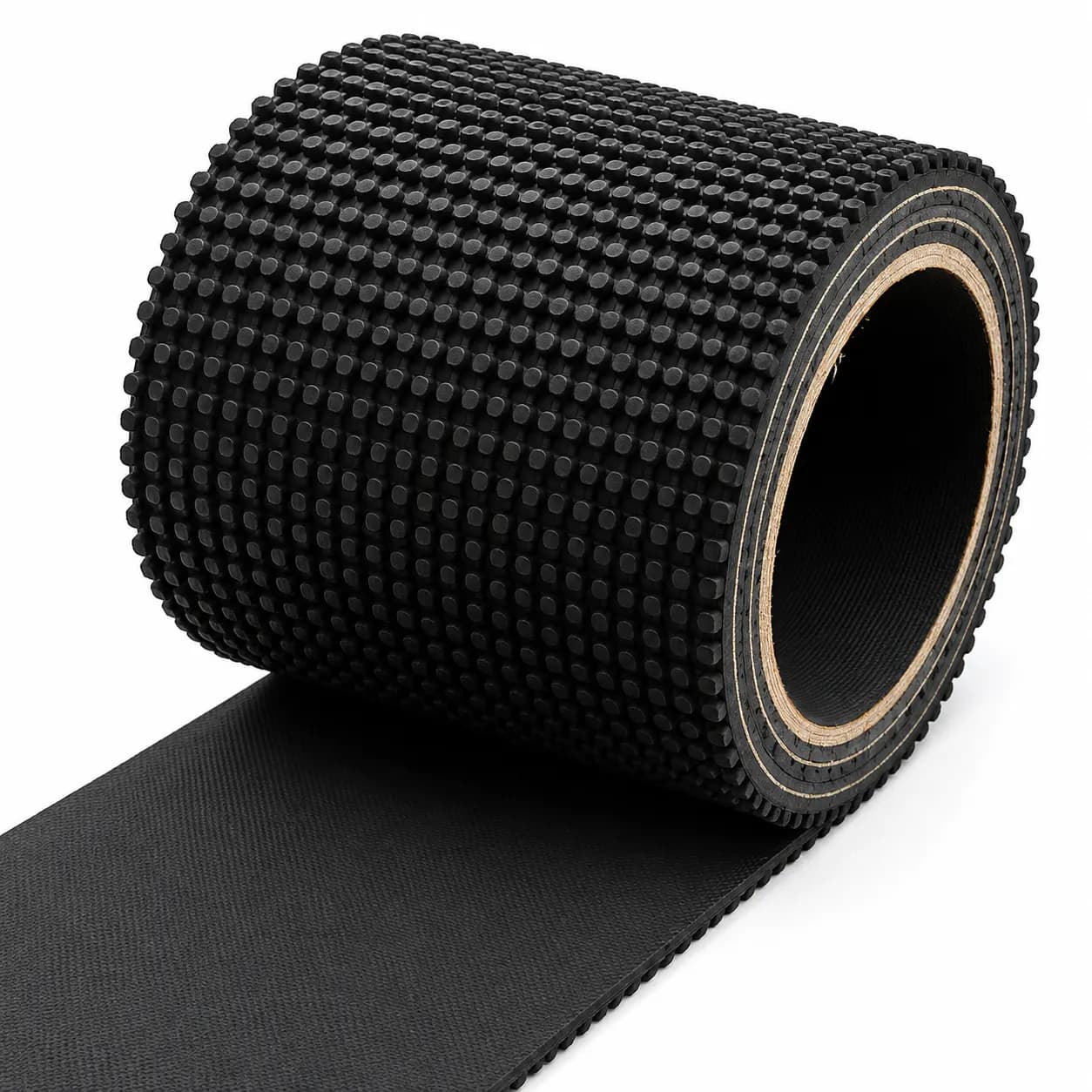
Rough Top Conveyor Belt
High-friction textured surface belt for handling slick packages and parcels.
Chemical Resistant Conveyor Belt
Specialized synthetic compound belt resisting acids, alkalis, and corrosive chemicals.
Frequently Asked Questions
Technical answers regarding our steel cord conveyor belt configurations.
The transition distance from the flat troughing profile to the fully troughed 35° or 45° angle near the pulleys is critical. It is calculated based on the cord pitch, dynamic tension, and carcass modulus. Symmetrical transitions typically require 1.0 to 1.8 times the belt width, whereas non-symmetrical transitions require up to 2.5 times the belt width to prevent high edge stress.
Our manufacturing line maintains a steel cord spacing/pitch tolerance of within ±0.5mm. Consistent tensioning of all steel cords during the vulcanization process is key; uneven cord tension creates structural camber, causing chronic belt tracking issues.
We embed specialized electromagnetic loops (rip inserts) within the rubber cover at intervals of 50 to 100 meters. When a sharp object pierces the belt and ruptures a loop, the station transmitter detects the open circuit and immediately stops the conveyor drive to limit tear length.
Steel cord conveyor belts must be spliced using specialized hot vulcanizing equipment. Splicing involves stripping the rubber to expose individual steel cords, arranging them in a multi-stage finger overlap pattern with tie-gum rubber, and vulcanizing the joint under high pressure (typically 12-14 bar) at 145°C.
For acidic or corrosive bulk materials, we manufacture anti-corrosive rubber covers that prevent chemical penetration to the steel cords. We also offer oil-resistant (OR) and abrasion-resistant (DIN X/Y) covers depending on the material specs.
Looking for the Right Industrial Solution?
Partner with The Earth India Company for durable, custom Conveyor Belts, Power Transmission Belts, and Conveyor Systems. Share your requirements, and we'll provide the best quotation.